Vietnam S Editorial Team
Updated May 20, 2026 · 6 min read · 0 comments
The former imperial capital of Vietnam, home to the Forbidden Purple City, royal tombs, and the finest royal cuisine in the country.
Stat
Hue: The Imperial City and Vietnam’s Cultural Soul
On the banks of the Perfume River in Central Vietnam, Hue was the imperial capital of the Nguyen Dynasty from 1802 to 1945 — the political, cultural, and spiritual heart of a unified Vietnam. Today, the city remains the country’s most historically significant destination, a place where royal tombs rise from pine forests, court music echoes in restored theaters, and the cuisine still bears the refinement of imperial kitchens. For travelers interested in Vietnamese history, culture, and gastronomy, Hue is essential.
The city’s geography is defined by the Song Huong (Perfume River), which flows slowly through the city center before emptying into the South China Sea. On the north bank sits the Citadel, a 2-square-kilometer walled complex of palaces, temples, and gardens that was the administrative center of the Nguyen emperors. South of the river, the Thua Thien Hue countryside contains the elaborate tombs of Nguyen rulers, each designed as a final statement of imperial power and Buddhist belief.
History: From Imperial Capital to War Zone
Hue’s significance predates the Nguyen Dynasty. The Cham established a religious center here in the 4th century, and the city became a Buddhist pilgrimage site with the construction of the Thien Mu Pagoda in 1601. The Nguyen lords who unified Vietnam in 1802 made Hue their capital, constructing the Citadel, the Forbidden Purple City, and a network of tombs that transformed the landscape into a vast imperial necropolis.
The American War devastated Hue. The 1968 Tet Offensive saw some of the war’s most intense urban fighting, and the Citadel was heavily damaged by American bombing and Viet Cong occupation. The city was divided by the DMZ, and the Perfume River became a front line. Restoration efforts since 1975 have rebuilt much of the Citadel, but scars remain visible in bullet-pocked walls and reconstructed palaces.
Top Attractions
- The Citadel & Forbidden Purple City: A 10-kilometer walled complex modeled on Beijing’s Forbidden City. The Ngo Mon Gate, Thai Hoa Palace, and Truong Sanh Residence have been restored to their imperial grandeur. Allow at least half a day.
- Tomb of Tu Duc: The most beautiful of the imperial tombs, set in a forested valley with lakes, pavilions, and a stone stele pavilion where the emperor composed poetry. The scale is intimate rather than monumental.
- Tomb of Khai Dinh: The most visually striking tomb, blending Vietnamese, Chinese, and European architectural styles. The interior mosaic of broken porcelain and glass is extraordinary.
- Thien Mu Pagoda: A seven-story octagonal tower on the Perfume River bank, the tallest religious building in Vietnam. The pagoda grounds include the car that transported monk Thich Quang Duc to his self-immolation in Saigon in 1963.
- Dong Ba Market: Hue’s largest market, a chaotic, colorful warren of stalls selling everything from silk to conical hats to live eels. The food court serves the best com hen (clam rice) in the city.
Imperial Cuisine: Hue’s Culinary Legacy
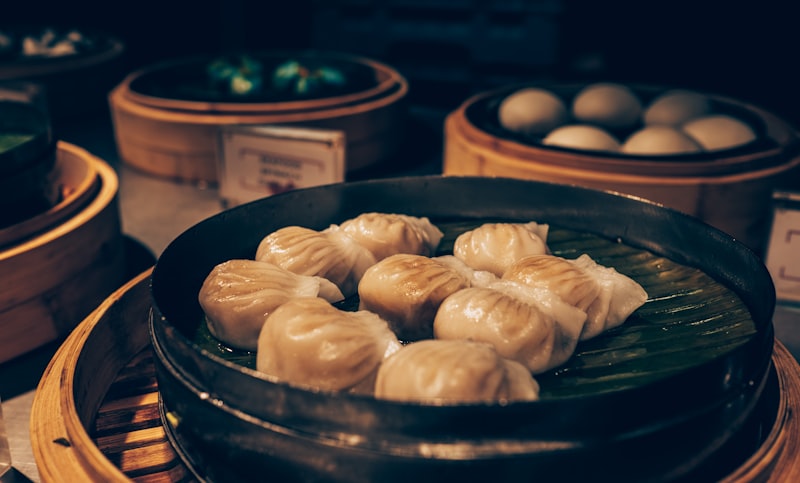
Hue’s cuisine is arguably Vietnam’s most refined, developed by imperial kitchens that created hundreds of dishes for the Nguyen court. The defining characteristics are meticulous presentation, complex flavor layering, and small portions designed for aesthetic balance rather than satiation.
Bun bo Hue is the city’s most famous export: a spicy beef noodle soup with lemongrass, shrimp paste, and multiple cuts of meat. Banh khoai is a crispy turmeric crepe filled with shrimp, pork, and bean sprouts. Banh beo are steamed rice cakes topped with dried shrimp, scallions, and crispy pork skin. Com hen (clam rice) is a humble but iconic dish of rice, clams, fried pork skin, and herbs.
For imperial banquet experiences, Ancient Hue Restaurant serves multi-course royal meals in a restored mandarin house. For street food, the stalls around Dong Ba Market and along Nguyen Sinh Cung Street offer the most authentic versions.
Traditional Arts
Hue is the guardian of several endangered art forms. Nha nhac (Vietnamese court music) is recognized by UNESCO as an Intangible Cultural Heritage. Performances at the Duyet Thi Duong Theater inside the Citadel recreate the music, dance, and ritual of Nguyen court ceremonies. Trang tien candy, conical hat making, and incense production are traditional crafts still practiced in village workshops.
Best Time to Visit
March–April and September–October offer mild temperatures (22–28°C) and minimal rain. Hue receives more rainfall than Da Nang and Hoi An due to its position north of the Hai Van Pass. The Hue Festival (held biennially, next in 2026) features imperial processions, boat races, and traditional arts performances.
Getting There & Around
Phu Bai Airport is 15 km from the city center (limited domestic flights). The train station is on the reunification line (3 hours from Da Nang, 14 hours from Hanoi). Within Hue, bicycles ($2/day) are ideal for the flat city center; motorbikes ($7/day) are necessary for visiting the rural tombs.
Where to Stay
The Citadel area offers atmospheric boutique hotels in restored colonial and traditional buildings ($40–$100). The Perfume River south bank has modern mid-range hotels with river views ($30–$70). Along Le Loi Street is the backpacker hub with budget guesthouses ($10–$25).
Insider Tips
- Visit the tombs in early morning (7–9 AM) before tour groups arrive and the heat builds. The tombs are spread across the countryside — a motorbike or bicycle tour is the best way to link them.
- The vegetarian food in Hue is exceptional due to Buddhist traditions. Try Chay Nhat Da or the vegetarian stalls at Dong Ba Market.
- Take a sunset boat ride on the Perfume River. The light on the Citadel walls and pagoda towers is magical, and the river breeze is welcome after a day of sightseeing.
Final Word: Hue is Vietnam’s most culturally significant city. The Citadel, the tombs, the cuisine, and the traditional arts create a destination that rewards deep engagement rather than superficial sightseeing. Stay at least three full days, hire a knowledgeable guide, and eat everything.
Practical Information: Entrance Fees & Hours (2025)
- Hue Imperial City (Citadel): 200,000 VND adults; 40,000 VND children 7–12; under 7 free.
- Royal Tombs (each): 150,000 VND (Minh Mang, Tu Duc, Khai Dinh, Gia Long); Dong Khanh 100,000 VND.
- Combo Passes (valid 2 days): 3 sites (Citadel + 2 tombs) 420,000 VND; 4 sites (Citadel + 3 tombs) 530,000 VND.
- Hours: Summer (Apr–Sep) 6:30AM–5:30PM; Winter (Oct–Mar) 7AM–5PM. Ticket counters open 7AM–5PM daily.
- Thien Mu Pagoda: Free, 7AM–5PM daily.
- Dong Ba Market: Free, 6AM–7PM.
Tip: Buy a combo pass if visiting 2+ tombs — it saves 30%+. Cash preferred at booths; Klook offers online booking. Visit tombs 7–9AM before tour groups arrive.
Tip
Planning a trip to Hue?
We partner with trusted hotels and tour operators. Book through our links and we earn a small commission — at no extra cost to you.
Advertisement
Google AdSense — Your ad here