Vietnam S Editorial Team
Updated May 20, 2026 · 5 min read · 0 comments
UNESCO World Heritage seascape of 1,600 limestone islands rising from emerald waters. The quintessential Vietnam icon and Southeast Asia's most photographed natural wonder.
Stat
Ha Long Bay: A UNESCO Masterpiece of 1,600 Limestone Islands
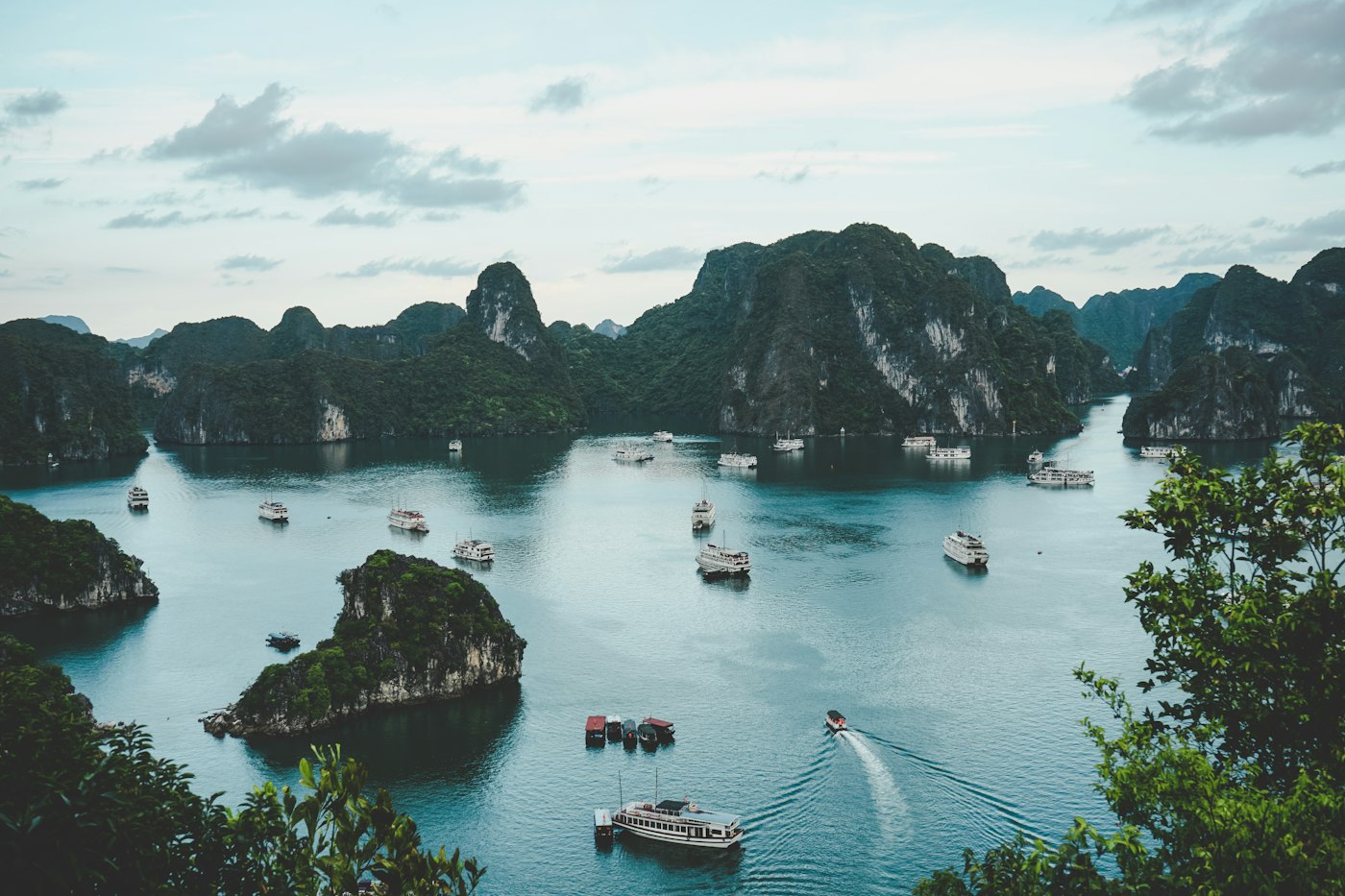
Ha Long Bay is Vietnam’s most iconic natural wonder — a 1,500-square-kilometer seascape of emerald water, 1,600 limestone karsts, and hidden caves that has earned UNESCO World Heritage status twice (for landscape in 1994 and for geology in 2000). Cruising among these weathered towers on a traditional junk boat, with the sun setting behind silhouetted peaks and the deck cooling in the evening breeze, is one of Asia’s essential travel experiences.
The bay’s name derives from a legend in which the Jade Emperor sent a mother dragon and her children to defend Vietnam from invaders. The dragons spat jewels that transformed into the limestone islands, forming an impenetrable barrier. Today, the bay’s islands bear names reflecting their shapes: Fighting Cock Island, Incense Burner Island, Human Head Island. Whether viewed from a kayak at water level or from the deck of a cruise ship, the scale is overwhelming.
Geology & Ecology
Ha Long’s karsts formed over 500 million years through tectonic activity, tropical weathering, and sea-level fluctuations. The result is a landscape of extraordinary diversity: towering pillars, hollow caves, hidden lagoons, and floating fishing villages where families have lived for generations.
The bay supports a fragile ecosystem of coral reefs, mangroves, and 200+ fish species. The Cat Ba langur, one of the world’s most endangered primates, inhabits the islands. Conservation efforts since UNESCO listing have reduced pollution and controlled cruise-ship numbers, though overtourism remains a concern in the central bay.
Cruising Ha Long Bay
The classic experience is an overnight cruise on a wooden junk boat with 8–20 cabins. Reputable operators (Bhaya Cruises, Paradise Cruises, Indochina Junk) offer 2-day/1-night or 3-day/2-night itineraries that include kayaking, cave visits, cooking classes, and sunset cocktails on the sundeck.
Budget travelers can book day cruises from Tuan Chau Marina ($35–$50) or take a public ferry to Cat Ba Island and explore independently. Kayaking through Luon Cave into a hidden lagoon, swimming at Three Peach Beach, and visiting Sung Sot Cave (“Surprise Cave”) are standard inclusions on most itineraries.
Top Attractions Beyond the Cruise
- Ti Top Island: A small island with a sandy beach and a 427-step climb to a panoramic viewpoint. The beach is crowded but the view is worth the effort.
- Sung Sot Cave: The largest and most impressive cave in the bay, with three chambers of stalactites illuminated by colored lights. Touristy but spectacular.
- Cat Ba Island: The largest island in the archipelago, with national park hiking trails, beaches, and a developing town with hostels and restaurants. Ideal for independent travelers who want to escape the cruise circuit.
- Floating Fishing Villages: Cua Van and Vung Vieng are the most accessible, with floating schools, houses, and pearl farms that can be visited by kayak.
- Bai Tu Long Bay: The less-visited eastern extension of Ha Long, with identical karst scenery but a fraction of the boats. Overnight cruises here offer a more serene experience.
Best Time to Visit
October–December offers cool, dry weather and clear skies. March–April is the second-best window with pleasant temperatures and blooming flowers. Avoid July–September when tropical storms can cancel cruises and reduce visibility. January–February is cold (15–20°C) and often misty, which creates atmospheric photography but limits activities.
Getting There
Ha Long is 170 km from Hanoi (3.5 hours by bus or private car). The new highway has reduced travel time significantly. Cat Bi Airport in Hai Phong (45 minutes away) offers limited domestic flights. Cruises depart from Tuan Chau Marina or Hon Gai Wharf.
Where to Stay
Overnight cruises are the definitive experience ($120–$400/night depending on cabin class). Cat Ba Island offers budget hostels ($10–$20) and mid-range hotels ($40–$80). Ha Long City has beachfront resorts and is convenient for day-cruise departures.
Insider Tips
- Book a cruise that includes Bai Tu Long Bay or Lan Ha Bay (south of Cat Ba) rather than the central Ha Long route. The scenery is identical but crowds are 80% smaller.
- Bring mosquito repellent and a light jacket for evening deck time.
- The pearl farms are interesting but the jewelry is overpriced. Enjoy the educational visit without feeling pressured to buy.
Final Word: Ha Long Bay is a victim of its own fame — but only if you take the cheapest, most central cruise. Invest in a quality operator, explore the outer bays, and spend at least one night on the water. Done right, it remains one of the world’s great natural spectacles.
Practical Information: Entrance Fees & Hours (2025)
- Government Sightseeing Fee (mandatory): Day trip route 290,000–310,000 VND (~$12–13). Overnight 1-night 540,000–590,000 VND (~$22–24). Overnight 2-night 650,000–790,000 VND (~$27–32). Usually included in cruise packages.
- Cat Ba National Park: 40,000–80,000 VND (~$2–3.50).
- Lan Ha Bay (adjacent): 300,000 VND (~$12) if cruising separately.
- Kayaking / Bamboo Boat: 60,000–100,000 VND (~$2.50–4) if not included in cruise.
- Overnight Cruises (per person, double occupancy): 3-star/budget $105–130; 4-star/mid-range $135–180; 5-star/luxury $190–350+. 2-night cruises: budget $210–250, luxury $350–600+.
Tip: Children under 1.2m usually free; seniors 60+ get 50% discount on sightseeing portion. Hanoi transfers ($20–35 round trip) and drinks onboard are rarely included. Book 3-star+ overnight for the real experience.
Tip
Planning a trip to Ha Long Bay?
We partner with trusted hotels and tour operators. Book through our links and we earn a small commission — at no extra cost to you.
Advertisement
Google AdSense — Your ad here